




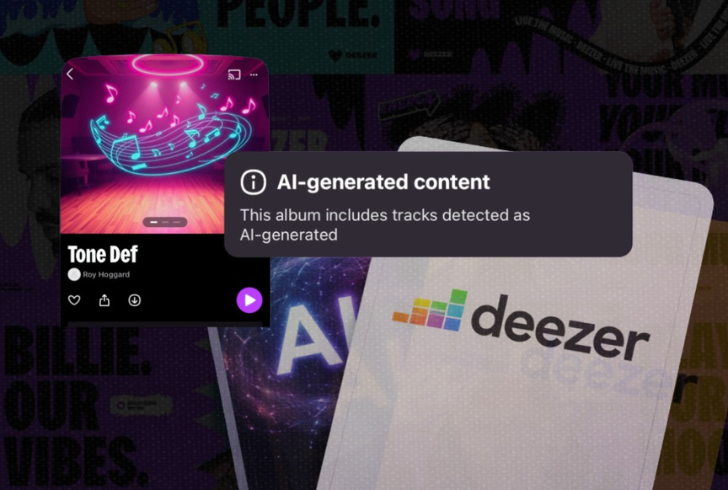
Deezer is opening access to its AI music detection tool, allowing other platforms and businesses to identify, tag, and filter AI-generated tracks. The tool, designed to remove AI-created music from algorithmic recommendations, has become increasingly relevant as AI-generated songs flood streaming platforms.
According to Deezer’s announcement on Wednesday, the technology is now available for companies to purchase and integrate into their systems.
Launched last year, the tool was created to protect royalties for human artists by preventing fraudulent AI music from impacting streaming revenue. In 2025 alone, Deezer has identified over 13.4 million AI-generated tracks, demonstrating the rapid growth of automated music creation. The platform reports that its detection tool achieves a 99.8 percent accuracy rate in distinguishing AI songs from human-created music.
The Scale of AI Music on Deezer
Instagram | @deviatedigital | Deezer scans millions of uploads each year to stop AI-made songs from taking money from real artists.
Deezer receives more than 60,000 AI track uploads daily, making up 39 percent of total uploads. This is a significant increase from the 30,000 daily AI tracks reported in September 2025. The company also discovered that up to 85 percent of AI-generated streams in 2025 were fraudulent, compared to only 8 percent of all streams on the platform.
Deezer CEO Alexis Lanternier commented on the issue, stating, “We know that the majority of AI-music is uploaded to Deezer with the purpose of committing fraud, and we continue to take action. Every fraudulent stream that we detect is demonetized so that the royalties of human artists, songwriters and other rights owners are not affected.”
Industry Response to AI Music
As AI-generated music becomes increasingly difficult to detect, streaming services are implementing stricter measures to ensure transparency for listeners.
Spotify, for example, began introducing new policies last year to address AI music and impersonation, alongside a new metadata standard for disclosing AI involvement in music production.
Bandcamp has taken a stricter approach by banning AI-generated content entirely, highlighting the growing divide in how platforms handle synthetic music. Meanwhile, platforms like Suno and Udio continue to provide tools for AI music creation, complicating detection and regulation efforts.
How the Tool Works

Instagram | star.ai.media | Deezer’s AI filter prevents fraudulent music from entering recommendation streams.
Deezer’s AI detection system scans uploaded tracks to identify patterns associated with synthetic music. Once identified, these tracks are tagged and excluded from recommendation algorithms, preventing fraudulent AI music from gaining visibility and disrupting artist royalties.
The adoption of this technology by other platforms could reshape the streaming ecosystem by making AI-generated content more traceable and controlled. For artists, this helps ensure that their work receives fair recognition and compensation, while listeners gain clarity about the authenticity of the music they stream.
AI-generated music is changing the way content is created and consumed, but not all AI tracks are legitimate. Tools like Deezer’s detection system provide a safeguard for human creators, ensuring that mass-produced AI tracks do not undermine artist earnings.
By sharing this tool with other platforms, Deezer is setting a precedent for transparency in music streaming. As AI technology continues to advance, detection and regulation will play a central role in preserving the value of authentic musical work.