Long highway drives often follow a predictable rhythm—steady speed, familiar views, and a clear destination ahead. Then, somewhere along Interstate 10 between Tucson and the New Mexico border, that rhythm shifts. Bright yellow billboards begin to appear, each one asking a simple yet persistent question: “THE THING?”
At first, it feels like background noise. Within minutes, it becomes impossible to ignore. That single question mark creates curiosity that builds mile after mile. By the time the exit for Dragoon, Arizona comes into view, the decision has already been made. The stop is no longer optional—it feels necessary.
The Power of a Question Mark
Instagram | _thekaptain_ | Minimalist billboards use calculated mystery and rhythmic timing to capture drivers’ attention.
The advertising strategy behind this roadside attraction is direct and unapologetic. Instead of explaining anything, the signs lean into mystery.
One sign asks, “WHAT IS IT?” Another declares “MYSTERY OF THE DESERT.” Each message adds just enough intrigue to keep attention locked in. The spacing between billboards feels intentional. They appear often enough to stay memorable but not so frequently that they lose impact.
That question mark becomes the driving force. It plants an idea and lets curiosity do the rest.
Conversations inside vehicles start casually:
“How many signs have there been?”
“What could it actually be?”
“Should the car stop?”
The discussion builds until stopping feels like the only logical next step.
Arrival at Dragoon
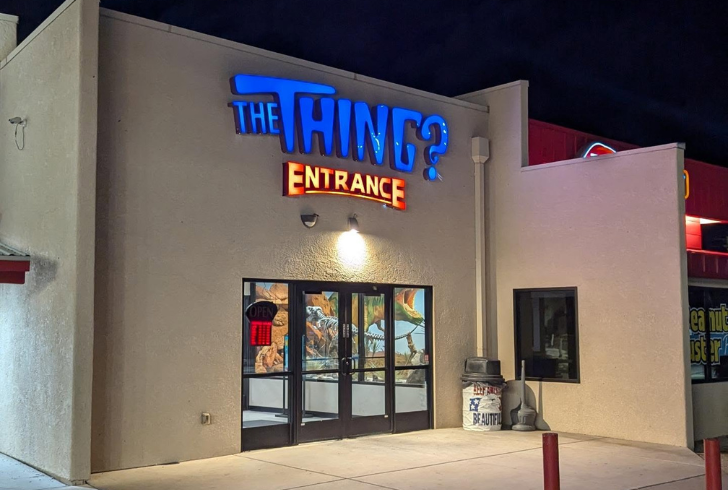
The exit leads to a surprisingly large roadside complex. It includes a gas station, a gift shop, and the museum that holds the long-awaited mystery.
The setting feels practical yet intentional. Fuel, restrooms, and snacks provide valid reasons to stop. Still, the real draw is the unknown waiting inside.
The entrance offers a map, which signals something important—this is not a quick glance attraction. It is a full experience that requires time and attention.
Visitors move from casual travelers to active participants, following a guided path through multiple buildings.
Inside the Museum
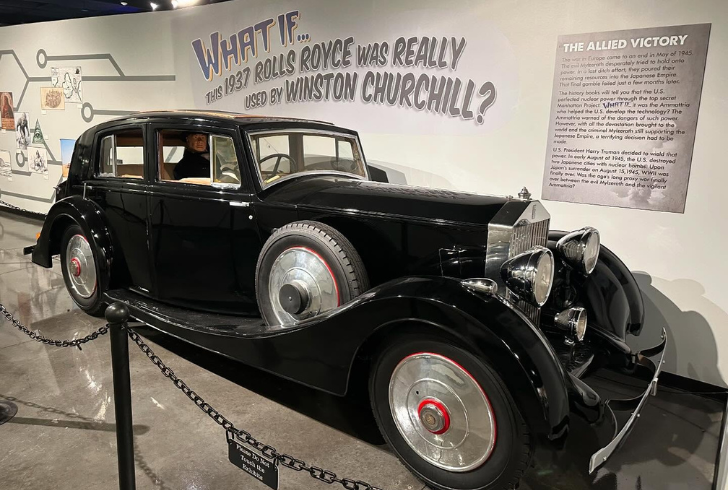
The first building introduces a collection of vintage automobiles. These are not random displays. Each car reflects a different era, with polished finishes and detailed preservation. The setting feels more like a curated exhibit than a roadside stop.
Walls feature old advertisements promoting long-forgotten products. The designs are bold, direct, and often exaggerated, offering a glimpse into past marketing styles.
As the path continues, the variety expands with displays that feel both lived-in and historically rich. Antique furniture appears carefully arranged as though it could still be used, while nearby, tools and household items reflect the routines of early frontier life.
Adding depth to the experience, old photographs capture moments from Arizona’s past, offering a quiet glimpse into the people and stories that shaped the region.
Despite the growing number of artifacts, one fact becomes clear: none of these items are “The Thing.” The mystery remains intact.
The Old West Influence
Instagram | punkyharvey81 | The museum features preserved covered wagons highlighting Arizona’s early desert travel history.
Arizona’s history plays a strong role throughout the museum. Covered wagons sit behind barriers, preserved in a way that highlights their importance in early travel across the desert.
These wagons tell a story of endurance. They represent a time when journeys were slow, uncertain, and physically demanding. Compared to modern highway travel, the contrast feels striking.
Other exhibits focus on daily life during that era. Tools, clothing, and personal items provide insight into how people adapted to harsh conditions.
The educational value becomes noticeable, even for visitors who initially stopped only for curiosity.
A Gradual Shift Toward the Unusual
As visitors move deeper into the complex, the tone begins to change. Historical exhibits blend with unusual displays that challenge expectations.
The environment feels slightly unpredictable. One room may focus on regional history, while the next introduces something completely unexpected.
This shift creates a balance between education and entertainment. It keeps attention high and prevents the experience from feeling repetitive.
The layout encourages exploration. Arrows guide movement, but each section feels distinct. The journey becomes part of the attraction.
Shared Experience Among Visitors
The museum attracts travelers from different backgrounds, yet everyone shares the same goal—finding out what “The Thing” actually is.
There is a sense of quiet connection among visitors. Eye contact, brief smiles, and short exchanges create a shared understanding.
Everyone has followed the same signs. Everyone has asked the same question.
That shared curiosity becomes part of the experience.
Building Anticipation
The design of the attraction focuses heavily on pacing. The mystery is never revealed too early. Instead, anticipation grows with each new section.
Visitors begin to speculate:
Could it be something historical?
Is it a scientific exhibit?
Is the entire concept just a clever marketing idea?
The lack of clear answers keeps the experience engaging. Each possibility feels plausible, which adds to the tension.
The Final Reveal
After moving through multiple buildings and displays, the path leads to the final room. This is where the long-promised mystery is presented.
“The Thing” sits inside a glass case, carefully lit to emphasize its importance.
Reactions vary widely.
Some visitors pause in silence, studying the display closely. Others laugh immediately, recognizing the clever buildup behind the experience. A few appear confused, unsure of how to interpret what they are seeing.
Phones come out quickly. Photos are taken. Conversations begin again.
There is no single correct response. The meaning of “The Thing” depends entirely on individual perspective.
The Role of the Gift Shop
The final stop in the complex is the gift shop. It serves as both a retail space and a continuation of the experience.
The product selection centers entirely on the mystery, reinforcing the experience even after the visit ends. Shelves are filled with T-shirts printed with “I Saw The Thing,” along with bumper stickers that highlight the familiar question mark seen along the highway.
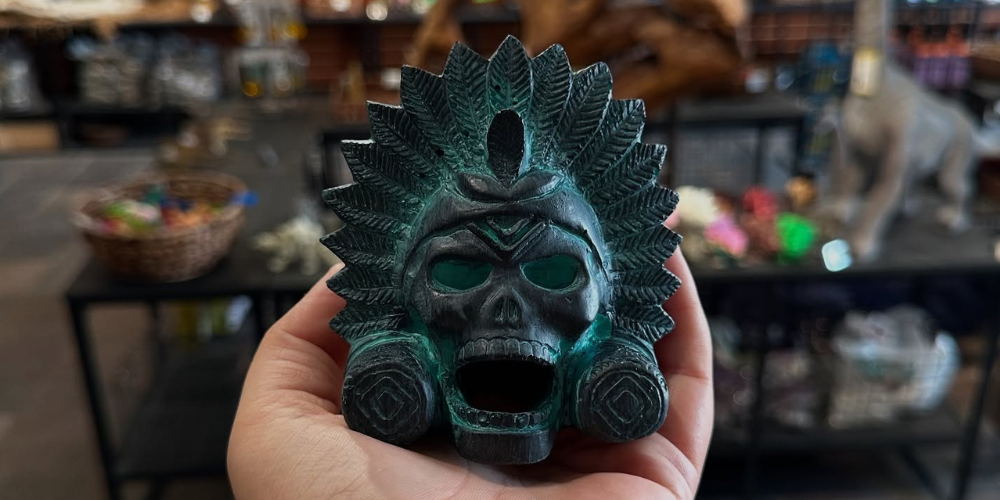
In addition, small souvenirs are available, giving visitors simple keepsakes that serve as lasting reminders of the stop. The shop also functions as a convenience store. It offers drinks, snacks, and travel essentials, making it practical for long-distance drivers.
This combination of curiosity and convenience reflects a well-planned business model.
Why the Experience Works
The success of this attraction is not based solely on the object inside the glass case. The real value comes from the entire journey.
From the first billboard to the final display, every step is designed to maintain interest.
Several factors make this experience effective. The steady repetition of messaging builds curiosity over time, keeping the mystery present without overwhelming attention. At the same time, the setting blends informative exhibits with entertaining elements, which keeps visitors engaged throughout.
The guided path encourages active participation, allowing each person to move through the experience with purpose. Along the way, a shared sense of curiosity naturally develops among visitors, adding a collective dimension to the journey.
This approach transforms a simple roadside stop into a memorable experience.
A Reflection of American Road Travel
Roadside attractions like this represent a specific part of American travel culture. Before digital navigation and direct routes became standard, road trips often included unexpected stops.
These stops added variety and created lasting memories.
“The Thing” continues that tradition. It offers something different from typical travel experiences. Instead of focusing on efficiency, it encourages curiosity and spontaneity.
The location along Interstate 10 makes it accessible while still feeling slightly removed from major urban areas.
A Place That Sparks Debate
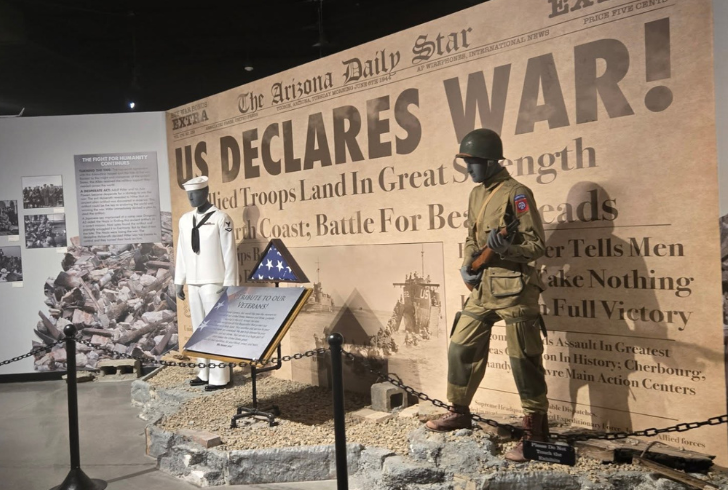
Instagram | andgee22 | The attraction's divisive nature fuels its fame, keeping it a constant topic of conversation.
Not every visitor leaves with the same opinion. Some view the attraction as entertaining and worth the stop. Others question whether the buildup matches the final reveal.
Interestingly, both reactions contribute to its popularity.
People talk about the experience long after leaving. They recommend it to others, sometimes with enthusiasm, sometimes with humor.
That ongoing conversation keeps the attraction relevant.
The attraction reflects a broader theme within Arizona itself. The state is known for natural landmarks, but it also embraces unusual and unexpected experiences.
This balance creates a distinct identity.
“The Thing” fits into that identity by offering something that does not rely on traditional expectations. It stands out because it is different.
The bold signage, the persistent mystery, and the varied exhibits all contribute to that distinction.
The Psychology Behind the Stop
The success of the attraction also highlights an important aspect of human behavior—curiosity.
A simple question, repeated often enough, can influence decision-making. The billboards do not provide answers. Instead, they create a gap that people feel compelled to fill.
This technique turns passive travelers into active participants.
It shows how effective simple messaging can be when it taps into natural curiosity.
“The Thing” in Dragoon, Arizona offers more than a single display behind glass. It presents a carefully structured experience built on anticipation, curiosity, and participation. From the first billboard to the final reaction, every stage contributes to its impact.
The attraction stands as a reminder that travel is not only about reaching a destination. Sometimes, the most memorable moments come from unexpected stops along the way.